



A helicopter hovering low over a battlefield used to be a show of force. Today, in a sky full of cheap drones and shoulder-fired missiles, it’s often a death sentence — and India’s Air Force just spent a week training for that new reality.
The Indian Air Force wrapped up Exercise Rotor Clap III on August 2, 2026, a week-long drill at the Pokhran Field Firing Range in Rajasthan built entirely around one theme: countering unmanned aerial systems.
What Happened at Pokhran
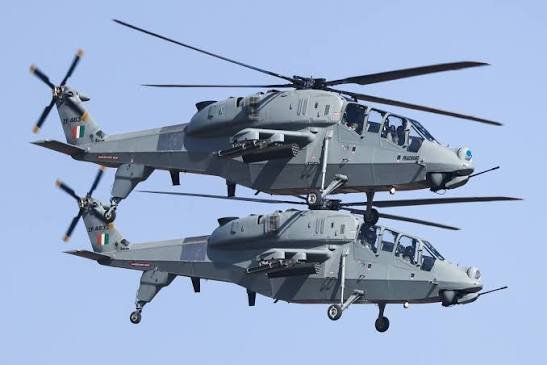
The exercise brought together a wide cross-section of the IAF’s rotary fleet — AH-64E Apache and Mi-25/35 gunships, the indigenous HAL Prachand light combat helicopter, and utility and heavy-lift platforms including the Mi-17V5, CH-47F Chinook, and ALH Dhruv. Crews ran live-fire missions with missiles and rockets, practiced detecting and neutralizing simulated drone threats, and worked on coordination between different helicopter types operating together in the desert terrain — all under conditions meant to simulate a real, contested battlefield.
The Old Playbook Doesn’t Work Anymore
The shift in doctrine driving this exercise didn’t come out of nowhere — it’s a direct response to how helicopters have actually fared in the Russia-Ukraine war. Hovering low near the front line, once standard for close air support, has become extremely dangerous given the sheer density of man-portable air defense systems (MANPADS), radar-guided missiles, and first-person-view attack drones now common on modern battlefields. Even staging areas aren’t safe anymore — forward arming and refueling points have increasingly become drone attack targets themselves.
A Tactic Borrowed From the Ukraine War
Among the techniques getting attention in defense circles is a Soviet-era maneuver sometimes called “kabrirovaniye,” or pitch-up lofting, which both Russian and Ukrainian helicopter crews have leaned on heavily. The idea: fly extremely low to stay under radar and visual detection, then suddenly pitch the nose up sharply and fire a salvo of unguided rockets in a high arc before diving back down and egressing with flares and evasive maneuvers. The payoff is real — an upward-arcing shot roughly doubles or triples a rocket’s effective range, letting crews stay far enough out — often 5 to 8 kilometers — to stay outside MANPADS range while still hitting the target.
Why the IAF Is Paying Attention
For India, the exercise reflects a broader pivot: helicopters aren’t just close-support and transport assets anymore, they’re increasingly expected to act as mobile counter-drone hunters, plugging gaps in ground-based air defense along contested borders where static radar systems can miss small, low, slow-moving drones. That’s part of why platforms like the Apache and Prachand — both gun- and rocket-armed — featured prominently in this drill.
What Comes Next
Expect the hardware to keep evolving alongside the tactics. IAF rotary aircraft are increasingly being fitted with directional infrared countermeasures to defeat heat-seeking threats, electronic warfare jamming pods, and AI-assisted radar systems — upgrades aimed squarely at keeping helicopters relevant, and survivable, in the kind of drone-saturated airspace that’s become the norm rather than the exception.