



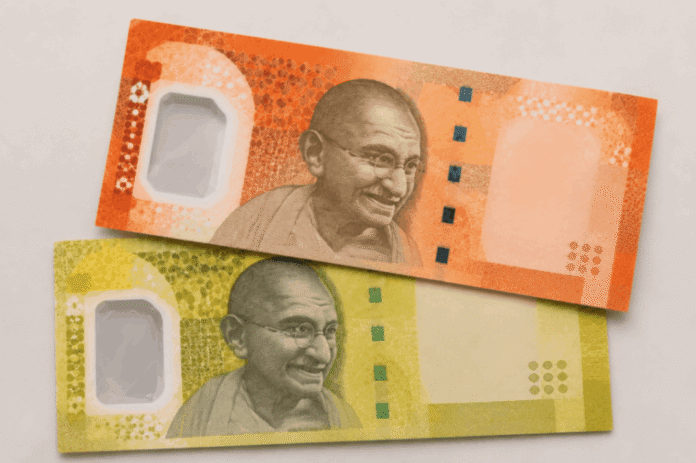
The Union Government has approved the Reserve Bank of India’s (RBI) proposal to conduct field trials for polymer ₹10 and ₹20 notes, marking a significant step toward modernizing India’s currency system. The confirmation came through a written reply by Minister of State for Finance Pankaj Chaudhary in the Lok Sabha.
The pilot will allow polymer banknotes to circulate alongside existing paper currency, with the government making it clear that this is not a replacement of paper notes, but a controlled trial to evaluate their performance in real-world conditions.
RBI’s Polymer Notes Pilot: Key Details
Under the approved pilot project, the RBI plans to issue 1 billion (100 crore) polymer ₹10 notes and 1 billion polymer ₹20 notes, representing a combined face value of ₹3,000 crore.
The polymer substrate required for printing is being sourced through Bharatiya Reserve Bank Note Mudran Private Limited (BRBNMPL), a wholly owned subsidiary of the RBI.
Importantly, both polymer and paper banknotes will remain in circulation simultaneously during the trial period.
Why Is the RBI Introducing Polymer Notes?
The move is aimed at improving the efficiency and security of India’s currency.
Lower-denomination notes such as ₹10 and ₹20 account for nearly 25% of all banknotes in circulation by volume, making them the most frequently handled and quickest to deteriorate.
Polymer notes offer several advantages:
- Longer lifespan by resisting moisture, dirt, folding, and tearing.
- Lower long-term printing costs, as fewer replacements are needed.
- Enhanced security features, including transparent windows, micro-optic elements, holograms, and specialized inks that are significantly harder to counterfeit.
Although polymer notes may cost more to produce initially, their extended durability can reduce the RBI’s expenses on printing, transporting, and destroying damaged currency over time.
Not India’s First Polymer Currency Trial
This is not the RBI’s first attempt at introducing plastic currency.
Following a proposal in 2009, the central bank conducted pilot tests of polymer ₹10 notes in Kochi, Mysuru, Jaipur, Bhubaneswar, and Shimla. However, the initiative was later put on hold due to technical and operational challenges.
With advancements in polymer banknote technology over the past decade, the RBI is now revisiting the concept with improved materials and production capabilities.
More Than 50 Countries Already Use Polymer Currency
India joins a growing list of nations exploring durable plastic currency. Australia became the first country to introduce polymer banknotes in 1988, and today more than 50 countries, including the United Kingdom, Canada, Singapore, and Vietnam, use polymer notes either partially or across their entire currency system.
If the RBI’s field trials prove successful, polymer banknotes could eventually become a common feature in India’s cash economy, offering longer-lasting, more secure, and cost-efficient currency for everyday transactions.